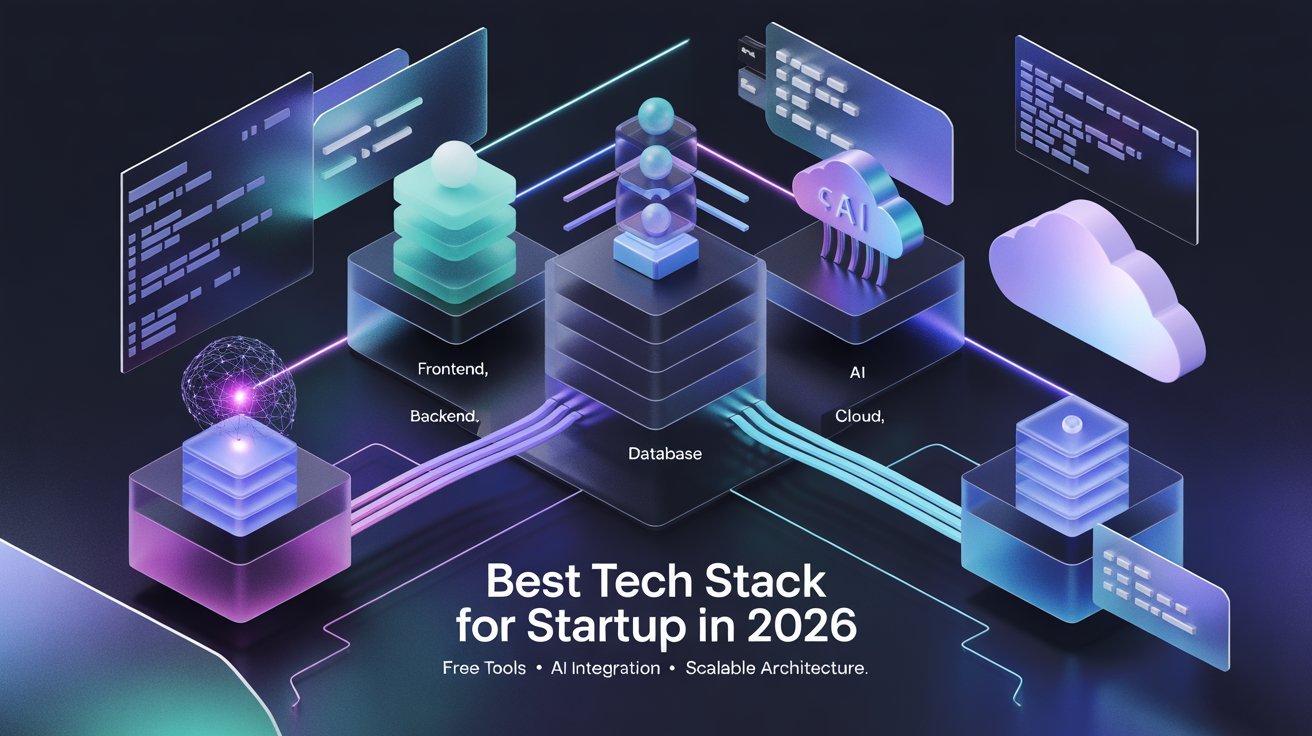
Introduction to Choosing the Right Tech Stack for Startup Growth
A startup’s long-term success is built on the strength of its technological decisions. The
tech stack for startup defines development speed, system reliability, scalability, and the
ability to integrate emerging technologies such as artificial intelligence.
When technology choices align with business goals, startups move faster, reduce operational
risk, and scale efficiently without frequent redevelopment.
We approach tech stack selection as a strategic foundation rather than a technical
preference. The objective is to build a high-performance, cost-effective, and future-ready
ecosystem that supports innovation from the earliest stages.
What Is a Tech Stack and Why It Matters for Startups
A tech stack represents the complete set of technologies used to build and operate a digital
product. It typically includes:
Frontend technologies responsible for user interaction
Backend technologies handling logic and data processing
Databases storing structured or unstructured data
Infrastructure and cloud services
Development and collaboration tools
An optimized stack ensures efficient development workflows, improved performance, and
seamless scaling as user demand grows.
Free Tech Stack for Startup: Building Smart with Minimal Cost
Early-stage startups must focus on validation before heavy investment. A free tech stack for
startup allows teams to build MVPs, test ideas, and iterate quickly without financial
pressure.
Frontend Technologies
React.js for dynamic interfaces
Vue.js for lightweight applications
Tailwind CSS for rapid UI development
Backend Technologies
Node.js for high-performance APIs
Python with Django or Flask for rapid backend development
Laravel for structured web applications
Database Solutions
PostgreSQL for reliability and data integrity
MongoDB for flexible schema-based applications
Cloud Infrastructure
Free-tier services from Google Cloud, Amazon Web Services, and Microsoft Azure enable
startups to deploy applications without significant infrastructure costs.
This approach allows startups to allocate resources toward product improvement and customer
acquisition.
Best Tech Stack for Startup in 2026
The best tech stack for startup balances performance, scalability, developer productivity,
and community support. Modern startups prioritize technologies that enable rapid releases
while maintaining code quality.
Recommended Startup Stack
Frontend
React.js or Next.js
TypeScript for maintainable development
Backend
Node.js with Express or NestJS
Python for data-driven applications
Database
PostgreSQL for structured systems
Redis for caching and performance optimization
Mobile Development
React Native for cross-platform development
DevOps
Docker for containerization
Automated CI/CD pipelines
This stack supports fast iteration cycles and ensures scalability as the product evolves.
AI for Startup: Integrating Artificial Intelligence into Your Tech Stack
Artificial intelligence has become a competitive advantage for modern startups. Implementing
AI for startup solutions enables automation, personalization, predictive analytics, and
operational efficiency without large teams.
Where AI Fits in a Startup Tech Stack
Customer support automation through AI chat systems
Recommendation engines for personalized experiences
Data analysis and forecasting
Process automation
Fraud detection and security monitoring
AI Technologies Commonly Used by Startups
Python-based AI frameworks
Machine learning libraries
Cloud AI services
API-based AI integrations
Startups benefit from integrating AI modules gradually, beginning with automation and
analytics before moving toward advanced predictive models. AI-ready architecture ensures the
system can evolve without major restructuring.
How to Choose Tech Stack for Startup: A Practical Decision Framework
Selecting the right stack requires aligning technical decisions with business objectives and
growth plans.
1. Product Requirements
Simple applications require lightweight stacks, while complex platforms need scalable
architecture from the start.
2. Development Speed
Frameworks with large ecosystems accelerate development and reduce time-to-market.
3. Scalability Planning
Technology choices must support increasing users, data volume, and integrations.
4. Talent Availability
Popular technologies reduce hiring challenges and improve development continuity.
5. Maintenance and Flexibility
A clean and modular architecture minimizes long-term technical debt.
This framework ensures startups avoid costly migrations and maintain development momentum.
Which Tech Stack Would You Choose for Your Startup?
The ideal choice depends on product vision and operational goals. However, common startup
combinations include:
For SaaS Platforms
React.js frontend
Node.js backend
PostgreSQL database
Cloud-native deployment
For Marketplace Applications
Next.js for performance-focused UI
Microservices architecture
Scalable database infrastructure
For AI-Based Startups
Python backend
Machine learning frameworks
Cloud-based AI services
For Mobile-First Startups
React Native
Firebase or Node.js backend
Real-time database systems
The strongest stacks prioritize flexibility and fast experimentation while maintaining system
stability.
Common Tech Stack Mistakes Startups Must Avoid
Poor technical decisions slow growth and increase operational costs. Avoiding common mistakes
ensures long-term efficiency:
Overengineering during MVP stage
Selecting technologies based on trends instead of needs
Ignoring scalability requirements
Combining too many frameworks early
Lack of testing and documentation
A focused and minimal approach delivers faster results and cleaner systems.
Future-Proofing Your Startup Technology Stack
Future-ready startups build technology with adaptability in mind. Strong stacks emphasize:
Modular architecture
API-first development
Cloud-native infrastructure
Automated deployment workflows
AI integration readiness
Startups that adopt flexible architectures respond faster to market changes and technological
evolution.
Conclusion
Choosing the right tech stack for startup is a strategic investment that shapes product
performance, scalability, and innovation potential.
Combining free tools, modern frameworks, and AI-driven capabilities enables startups to build
faster, scale confidently, and remain competitive in rapidly evolving markets.
A well-designed technology foundation empowers startups to innovate continuously while
maintaining operational efficiency.
 GROOT
TECHNOLOGIES
GROOT
TECHNOLOGIES